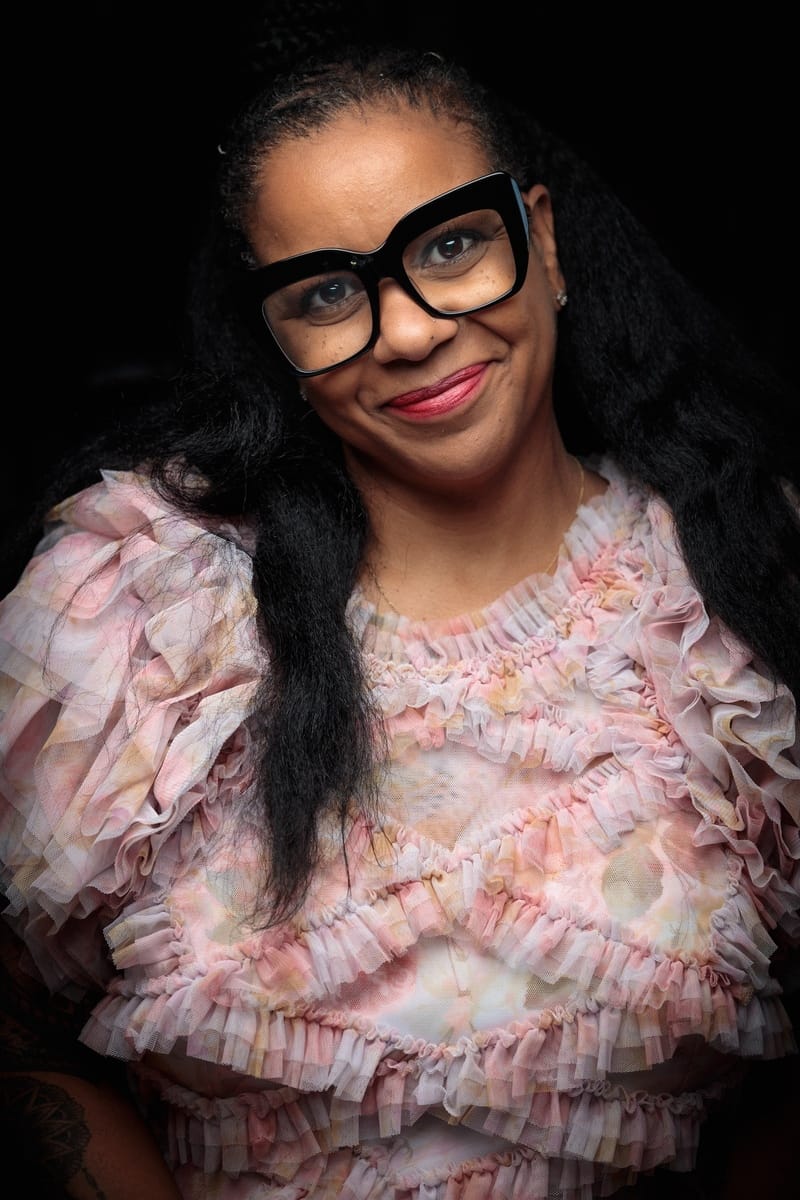
“What privilege are you willing to give up for an equitable society?”
My college professor Dr. Gary Lemons looked at the 12 of us new young college students of all different backgrounds (think multicultural Breakfast Club) in our Whiteness of Blackness class at Eugene College at The New School. It was our first day and many of us had never even considered privilege, equitable, give up, or society in that way. What privilege would I - a Black young woman from Detroit, lower lower middle class, there on scholarships and loans, first time out of Detroit BY MYSELF - have?
Turns out a lot. In fact, many of us have many privileges we don’t count. Just like blessings if you believe in them.
That course was about us studying the beautiful literary work of the Harlem Renaissance that focused on the trend of many Black people, post Reconstruction and having mixed ancestry (many many times forced), making the decision to leave the difficulty of being Black in America behind and deciding to pass for white. Jessie Redmond Fauset’s Quicksand & Passing were our anchoring texts. The course sparked A LOT of conversation about race and socio economic status in America. So much so that a few white students transferred out saying “it was really hard to talk about race everyday” disregarding how it feels to live it.

Me and my dad my first trip back home from college. I had asked him to give me his haircut. Image of a young Tara in front of her father in matching white t shirts posing for a picture outside.
So you see, I’ve been at this diversity, equity, inclusion, belonging, etc etc etc thing for a long time (I make no bones about being Gen X so that class was 30ish years ago). I never needed a corporate title to understand what all of those DEI programs were trying to achieve. So when I share my experiences, please know that they are not all academic, clinical, or anecdotal. They are lived experiences. And that was my first encounter with what we call allyship. All of its promise, its conditions, and its frailty.
As my girl Madison Butler (as have others) said, ally has to be a verb.
It isn’t a social media trend or a title. It’s something you have to do. This means you have to actively do something to make space for someone else who doesn’t have access to your resources to be next to you. It’s not called using. It’s called giving up stuff to make an equitable society. If someone drops your name in a space they are rarely in, to ally means to be more than fine with that. One of my favorite follows is Daisy Auger-Dominguez who tells the story of how her white boss was the one who kept bringing her in the room, kept presenting her with opportunities, kept giving her the playbook that she wouldn’t know so she could make the best use of her opportunities like he knew she would. Nothing in return. That’s what it means to ally.
On discovering what allyship is in practice, the hardest obstacle I have seen as a practitioner of DEI is not working with people whose lived experiences are sheltered or limited in their exposure to others. I love sharing education. It’s really the people who are rigid in their ideas and beliefs that have limited information or scholarship that got them there. They may donate money to World Central Kitchen (my favorite) but then turn around and microaggress their colleagues whether they are Black, LGBTQIA+ members, older women, etc. The actions aren’t the main harm. The refusal to take feedback because you think you are a helpful person because you donate to WCK is the added layer. Allies have to have the ability to always ask what Dr. Gary Lemons asked us back at Lang. What are you willing to give up to make a more equitable society? Is it your ego? Is it your firm hold on what you think is your calling/management style even though it harms others?
Our collective progress depends on our ability to be vulnerable. I tell my inclusion clients that I don’t have a magic wand so if you really don’t believe in this equitable work, none of what I do is going to change that. And if you come into this work with rigid ideas of how it should go, it won’t work either. It’s collective learning, growing, understanding and making space. This is why many DEI practitioners who were going into spaces around 2020 berating and bashing specifically white people as a shame tactic failed drastically. Shame is not an inclusion tactic. It never has been and it never will be. It just doesn’t make sense from a psychological standpoint. When I first got a title doing this work, one of the first people whose work I devoured was Aubrey Blanche. Aubrey was building equitable and measurable DEI programs with data and psychology - and doing all of this publicly for the sake of collective progress. A few months ago I saw Aubrey post about shame not being an effective tactic and I have been thinking about that ever since. I thought about all of the programs I saw fail when people felt berated and admonished. You could watch them shut down real time. Nobody learns when they shut down. In fact, I have seen these programs be used as a counterpoint to actually making any change in the workplace because they failed so badly.
But let's end this on a lighter note. Here are some tips to help you ally (as a verb) so you don’t go down that road of being too rigid to learn and grow. I guarantee this will get you further than feeling like you have to be the smartest person in the room. This is the burden some leaders feel when they are put in charge of teams.
Weaponize your mediocrity If you have ever been given an opportunity you were not fully qualified for, use that awareness. Advocate for extending the same benefit of the doubt to people who are routinely held to a higher standard before they get the same shot.
Examine what you think you are owed We will all fail at something that is related to inclusion or equity. I have misgendered people. I have used the wrong terminology when it comes to neurodiversity. There’s plenty more. I have normalized having an apology and amends framework. But I also know I run the risk of not getting a second chance if I have caused harm. I know it’s not running away from hard conversation but rather understanding that people protect themselves and I’m not owed a second chance. It’s a hard lesson but it’s a valuable one. You still try to adapt an apology and amends framework that works for you and you vow to do better.
Examine what you are willing to give up Just like Dr. Gary Lemons posed to us students, ask yourself what around you can fall to the side for the sake of other people’s advancement and progress? Is it your ego? Is it your belief in what you deserve? Is it an opportunity that you know someone else would be better off having? Is it your proximity to power in a specific org structure? Is it gatekeeping even though it works in your favor?
Track the emotional tax, not just the bias Research from Catalyst documents the cognitive and emotional load that comes from navigating bias daily. It is cumulative and it affects performance. Allies factor this in when evaluating output and capacity.
Don’t confuse your method for your message I’ve met a few people in my day who are dedicated to change and it’s all very honorable in its intentions (unless of course it’s the shame tactic we were talking about) but there comes a time to pivot when your message gets lost. Sometimes our methods don’t reach and the real value is your message. Your what is way more important than your how because your how will change. One day you might find podcasts are the best way to spread your story. And then you realize you might need to pivot. My theatre degree taught me that you want to speak so the audience can hear you. Not YOUR audience. THE audience. The audience are the people who will be most impacted by your message. Your audience are the people who are already there and they are already part of the larger audience. Notice how figures like Malcolm X changed their delivery over time. Growth. If you stay attached to how you deliver what you think is important, you could become stagnant. Great leaders and businesses have the ability to change to fit their environment. They progress.
Some of my favorite books on this:
The Waymakers by Tara Jaye Frank
Caste by Isabel Wilkerson
Talk to Me Nice by Minda Harts
The Wake Up by Michelle MiJung Kim
My latest podcast feature
Living Corporate’s Zach Nunn is a force. When I first met him, he had an idea and I had a budget as an in house Talent Acquisition leader. My latest podcast with him (grateful to have done a few) reminded me about the purpose of have being in a position to provide access and opportunity to someone. It reminds me of my favorite Toni Morrison quote:
"I tell my students, 'When you get these jobs that you have been so brilliantly trained for, just remember that your real job is that if you are free, you need to free somebody else. If you have some power, then your job is to empower somebody else. This is not just a grab-bag candy game.'"
You can catch the whole podcast here:
There’s no need to let your talent problems continue. Recruiters are busy recruiting but we can solve your training challenges to ensure you are getting the best candidate assessments you need to make your business stronger.

